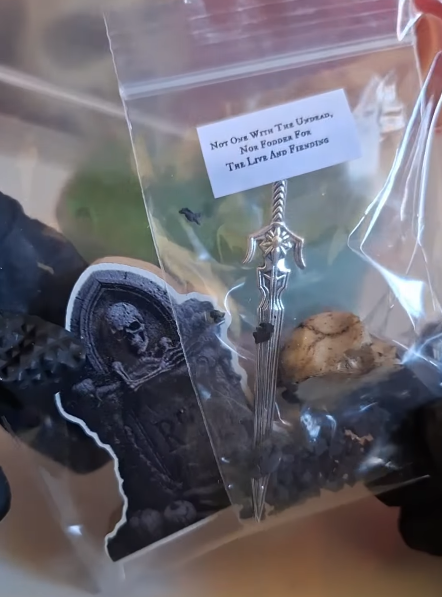
NOT ONE WITH THE UNDEAD
NOR FODDER FOR THE LIVE AND FIENDING //
✋original floracraft wood glue blend snowfizz
👃smoked hinoki wood, aged tea leaves, dark resins, moss, dried plum
*NOTE: Each slime comes with a randomly chosen gravestone-themed charm and a toy metal spear or sword. There are many different charm styles including ones not pictured. See photos for examples of some of the different charm styles.
-
Ibaraki’s album Rashomon takes inspiration from singer Matt Heafy’s heritage, moving away from typical Nordic black metal themes & exploring Japanese folklore instead.
“Rōnin” by Ibaraki (feat. Gerard Way of MCR) uses the symbolism of a rōnin (a samurai whose master has died) to explore ancestral trauma, revenge & grief, particularly around colonialism & the erasure of his culture.
Although not an MCR song, I’ve enjoyed a lot of frontman Gerard Way’s nerdy little side quests, & this song fit too perfectly with the collection to leave it out, speaking to survival despite struggle. In MCR, Way mostly sings clean vocals, but in Rōnin, he pulls out haunting, full-on black metal screams that are so gnarly & cool - his lines are some of my favorite from the song:
Our lands are threatened by an invisible force
The concept of hatred: both spoken & verse
Plaguing the people - it poisons the mind
Teaching to hate that which is not their kind
Not one with the undead
Nor fodder for the live and fiending
I'm a challenger of every horde
That would try to live by loathsome reason
Take me back to the times when it was safe
Back where the rivers flowed, free by the lakes
Our lives are challenged by an invulnerable swarm
They know only hatred, fear, & discourse
Gathering strength so that I may defeat
These monsters whose minds are corrupt with disease
My reading of this song is that it tells the story of a rōnin who has lost everything to colonialism, having been part of the oppressive system. (Historically, samurai were enforcers of colonial authority, contributing to the displacement of indigenous groups like the Ainu.) Having lost his master, he is wandering, purposeless, having been hardened to violence. The song speaks to bigger systems of power fueled by hatred, framed as a swarming plague.
The narrator refuses to be absorbed into this cycle nor victimized & erased. Rather than let his rage consume him, he channels it into resistance, encouraging those of us facing oppression to keep fighting.